
A bulge in a tire sidewall means the tire’s internal structure has been damaged, and the tire is not safe to keep driving on. It can’t be patched or repaired. The fix is to swap in your spare, get the tire inspected, and replace it. The terms “bubble” and “bulge” describe the same thing, so if you’ve spotted either one, treat it as urgent.
That can feel like a gut punch, especially if the tire looks fine otherwise. Let’s walk through why a bulge forms, what to do in the next hour, and how to pick the right replacement so you don’t repeat the problem.
TL;DR
- A sidewall bulge or bubble is a sign of internal tire damage, not a cosmetic flaw. Michelin says the tire is structurally compromised and at high risk of a sudden blowout.
- Don’t keep driving on it. Fit the spare and have the tire inspected. A bulged sidewall can’t be repaired.
- Curb strikes, potholes, speed bumps taken too fast, and incorrect inflation or overloading are the usual causes.
- A smooth, shallow indentation is different from a bulge and is often a normal feature of radial tire construction.
- When you replace the tire, match the type and load capacity to your vehicle’s placard, especially on trucks and SUVs that may use LT tires.
Table of Contents
- What is a tire sidewall bulge, and is a bubble the same thing?
- Bulge vs. indentation: not every sidewall dent is a problem
- Is it safe to drive on a tire with a sidewall bulge?
- What to do when you find a bulge
- What causes a bubble in the sidewall?
- Why a professional inspection matters
- Perspective: why we check the whole picture, not only the tire
- Choosing the right replacement: P-metric vs. LT tires
- Promo: tire and repair help in North Arlington
- How to prevent sidewall bulges
- Schedule a tire inspection in Arlington
- FAQ
- Sources
What is a tire sidewall bulge, and is a bubble the same thing?
A bulge and a bubble are the same problem. Both describe a spot where the sidewall pushes outward, as if something is trying to inflate under the rubber. Michelin explains that this happens when air gets in between the cords that give the tire its strength. The outer rubber is still holding, but the structure behind it isn’t.
Think of it like a blister on your heel. The skin on top looks mostly intact, but something underneath has given way, and the spot is only going to get worse with more walking.
How to spot one
You don’t need tools to find a bulge. Try this:
- Park on level ground in good light, with the wheels pointed straight ahead.
- Crouch down and look along the sidewall at a low angle. A bulge shows up as a bump that breaks the otherwise smooth curve.
- Run your hand lightly over the sidewall (with the car off and parked). A bulge feels like a soft, raised knot.
- Check both sides of every tire, including the inner sidewall you can’t see from the driver’s side. Inner-side damage is easy to miss unless you crouch and look.
- Check the spare as well if you haven’t looked at it in a while.
Bulges can also show up after an impact you barely noticed. You hit a pothole on I-30, felt a thump, and kept going. A week later, there’s a bump on the sidewall. That delayed appearance is common enough that it’s worth checking your tires after any hard hit.
Bulge vs. indentation: not every sidewall dent is a problem
Before you panic, make sure you’re looking at a bulge and not an indentation. They look like opposites. A bulge pushes out. An indentation sits slightly in, often as a shallow, smooth dip.
According to the U.S. Tire Manufacturers Association (USTMA), sidewall indentations are a common, harmless characteristic of radial tire construction. They’re often caused by overlapped ply cords that limit how much the sidewall expands when inflated. Michelin also describes indentations as a normal, cosmetic feature rather than a defect.
Here’s a quick way to tell them apart:
| Feature | Bulge or bubble | Indentation |
|---|---|---|
| Shape | Raised bump pushing outward | Shallow dip or groove |
| What it means | Damaged internal cords | Normal overlap of ply cords |
| Safe to drive on? | No | Generally yes, per USTMA |
| Action | Replace the tire | Nothing needed |
If you’re not sure which one you have, don’t guess. Have a technician look at it. A quick inspection costs a lot less than a blowout on Highway 360 at rush hour.
Is it safe to drive on a tire with a sidewall bulge?
No. Michelin states plainly that driving on a bulged tire isn’t safe: the tire is structurally compromised and at high risk of a sudden, dangerous blowout. Its guidance is to replace the tire immediately. If you have no spare at hand, drive only at low speed and only the short distance to a service center.
You’ll see articles online that give a specific number of miles or days you can “get away with.” We won’t, because no honest number exists. Once the cords are broken, the sidewall can fail at any time: on a highway, in a turn, in the heat of an Arlington August afternoon. Sidewalls flex constantly, and heat and speed both add stress.
Why a bulged sidewall fails suddenly
The sidewall is where a tire flexes the most. Inside it, layers of cords hold the air pressure. When some of those cords break, the rubber over that spot is holding back the air alone. It may hold for a day or give out in a mile. You can’t see how close it is to failing, which is exactly why we don’t recommend gambling on it.
What to do when you find a bulge
Here’s the order we’d follow, and the one Michelin recommends: stop using the tire, fit the spare, and take the damaged tire to a retailer for inspection.
- Pull over somewhere safe. Choose a parking lot, a wide shoulder, or a side street. Turn on your hazards.
- Check the spare first. Make sure it’s in good shape and has air, and that you have the jack and lug wrench. Your owner’s manual shows where they are and how to use them.
- Swap the tire. If you’re not comfortable changing it, call roadside assistance. Don’t tackle it on a busy shoulder if it doesn’t feel safe.
- Drive gently to a shop. A compact temporary spare has its own speed and distance limits, printed on the spare or in your manual. Follow them.
- Get the tire inspected. A technician can confirm it’s a bulge, look at the other tires, and check whether the impact hurt anything else.
If you can’t change the tire at all, the same Michelin guidance says to drive only at low speed for a short distance to reach a service center. Treat that as a last resort, not a plan.
Can a sidewall bulge be repaired?
No. Michelin notes that flexing can cause repair material to detach, which can lead to sudden failure. That’s different from a nail in the tread, where a proper repair may be possible under the right conditions. If that’s your situation, our guide on when a tire puncture repair is safe walks through what a pro checks. A bulge is a replacement job, full stop.
What causes a bubble in the sidewall?
Most bulges come from one of a few sources. Knowing them helps you avoid the next one.
Impact damage
The most common cause is a hard hit. Continental explains that obstacles such as curbs or speed bumps can overstress the tire carcass and break its cords. It adds that impact breaks usually happen when you drive over those obstacles at excessive speed or the wrong angle.
Think of the tire pinched between the road and the wheel rim. The tread is thick and tough. The sidewall is thin. When the tire gets squeezed, the sidewall’s cords take the shock.
In Arlington, the usual suspects are easy to picture: a rough patch on Brown Boulevard, a pothole after heavy rain, a tight turn into a parking space at a busy shopping center, or a curb you clipped in a hurry. Pirelli notes that front tires are more commonly affected because they tend to hit curbs more often than the rears.
Low pressure and overloading
The USTMA says under-inflation and overloading cause heat buildup and internal structural damage. A tire that’s low on air flexes more with every rotation. That extra flexing makes heat, and heat wears down the structure from the inside, even before you can see any outward sign.
The same guide notes that over-inflated tires are more likely to be damaged by sudden impacts. So the goal isn’t “more air is safer.” It’s the right pressure.
The USTMA’s guidance is to never set pressures below the level recommended on your vehicle’s tire placard, and never exceed the maximum inflation pressure shown on the tire sidewall. The placard is usually on the driver’s door jamb. Your owner’s manual lists the same numbers along with load limits.
Manufacturing issues
It’s less common, but it happens. A Cooper Tire recall filed with NHTSA in 2021 said certain tires could develop sidewall bulges because of production variations or stacked ply endings that could create trapped air voids during manufacture. If a tire bulges with no impact you can remember and little mileage on it, ask the shop to check the tire’s DOT code against recall databases and ask about warranty coverage.
Plain old age and wear
A worn tire with weak, tired rubber has less resistance to an impact. If your tread is already low, you’re closer to replacing the tire anyway. Our guide to minimum tire tread depth covers how to tell when it’s time.
Why a professional inspection matters
You can spot a bulge yourself. What you can’t easily do is judge what else the impact hurt. A hard hit that bulges one sidewall can also bend a wheel, knock a suspension part, or damage the tire’s inner side. That’s why we recommend a full look, not only a tire swap.
During an inspection, a technician will typically:
- Confirm whether it’s a bulge, an indentation, or a different kind of damage
- Check all four tires (and the spare) for cuts, bulges, and irregular wear
- Look at the wheel for bends or cracks
- Check pressures against the placard
- Inspect suspension components if the impact was severe
The USTMA recommends that a professional check tires for irregular wear, cuts, and bulges during routine maintenance intervals, such as oil changes. That’s an easy habit: every time your car’s in for service, ask someone to look at the sidewalls.
If your car also pulls to one side after the impact, that can point to something beyond the tire. We cover the starting points in why a car pulls left or right.
Perspective: why we check the whole picture, not only the tire
At Express Lube & Car Care, we see a sidewall bulge as a symptom with a story behind it. The tire is the part you can see, but the hit that caused it can leave other damage behind.
That’s why our ASE-certified technicians look at the whole picture: the other tires, the wheel, and the parts around them. Our digital vehicle inspections include photos and videos, so you can see what we see before you decide anything.
We’re a full-service repair shop, not only an oil change stop. If the impact reached the suspension or the brakes, we can handle that too. And we’d rather you replace one bad tire today than drive on it until it makes the decision for you.
Express Lube & Car Care
Choosing the right replacement: P-metric vs. LT tires
Once the bulged tire is off, you need a replacement that fits your vehicle. Drivers of SUVs, pickups, and vans often ask about the difference between P-metric (passenger) tires and LT (light truck) tires.
The short answer: they’re different designations, and they can have different load capacities. Don’t pick based on size alone, and don’t pick based on which one looks right.
How to pick the right type
The USTMA says to choose replacements using the original-equipment minimum requirements listed on your vehicle’s placard, certification label, owner’s manual, or from the manufacturer. That’s the same source for both tire type and load capacity.
The USTMA’s care and safety guide adds that replacement tires should be the same size and construction as the original equipment. It warns that mixing tire types, sizes, or construction can make a vehicle handle unsafely.
Two practical points:
- Don’t assume similar dimensions mean interchangeable. The USTMA cautions that LT-Metric and European Metric C-Type tires may not be interchangeable even when the dimensions are close, because load capacities can differ significantly.
- Think about how you use the vehicle. If you tow, haul, or run a work truck, tell the technician. Load capacity matters more when the vehicle works hard. Fleet owners can read about our fleet services.
Replace one tire or a pair?
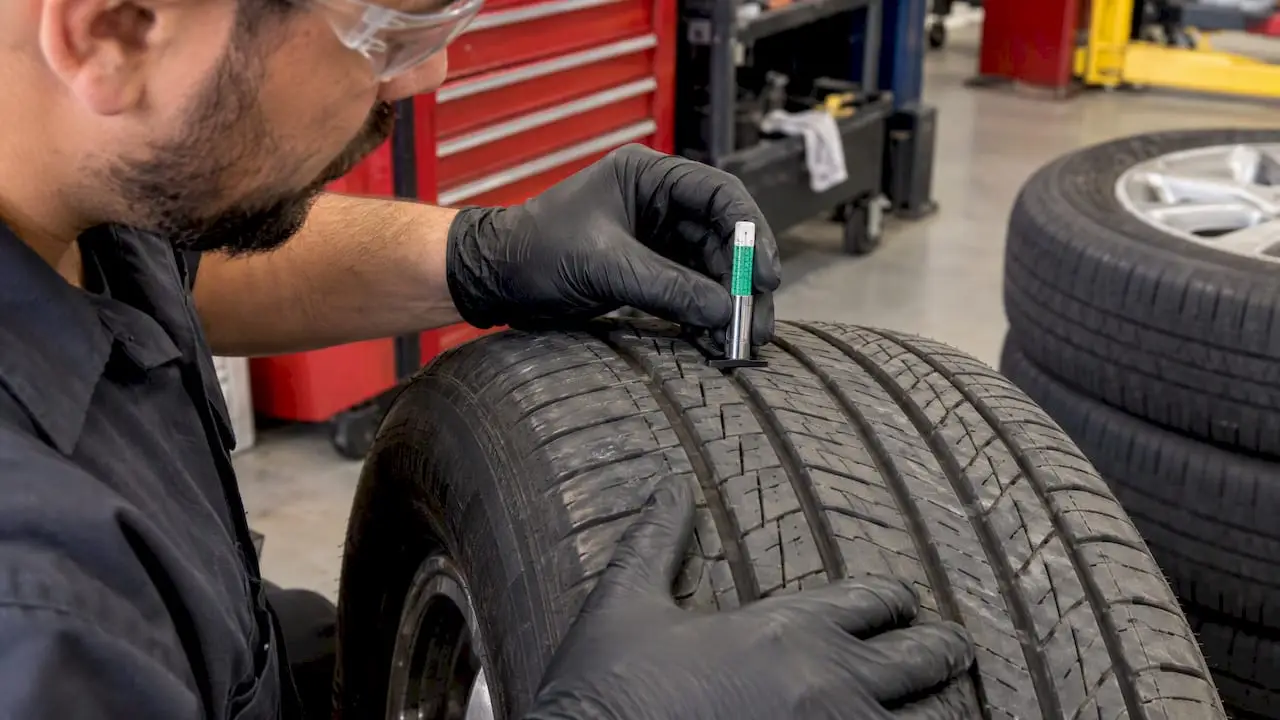
This depends on the vehicle and the remaining tread on the other tires. Your owner’s manual and the tire manufacturer’s guidance matter here, especially on all-wheel-drive vehicles, where tires of mismatched wear can be a concern. Ask the technician to measure the tread on the others and explain the options. You can also measure it yourself with our tread depth measuring tips.
Promo: tire and repair help in North Arlington
If you’ve found a bulge, you don’t need to guess what’s next. Our ASE-certified technicians can inspect the tire, check the other three, and look at what the impact may have affected. Digital inspections with photos and videos show you the findings, and many jobs are done the same day. Browse everything we do on our services page.
Our 24-month/24,000-mile warranty applies on qualifying repairs, so ask about coverage when you book. If cost is a concern, we can talk about third-party repair financing through Snap Finance, subject to provider approval and terms. Details are on our financing page.
How to prevent sidewall bulges
You can’t dodge every pothole in Tarrant County, but a few habits cut your risk:
- Check pressure monthly and before long trips. Use the numbers on the door-jamb placard, not the number molded on the tire sidewall. The sidewall number is the maximum, which you shouldn’t exceed.
- Stay within your vehicle’s load limit. Your manual lists it. Overloading builds heat.
- Slow down for bad pavement and speed bumps. Hit them straight and slowly, not at an angle.
- Give curbs room. Tight parking and sharp turns are a classic way to pinch a sidewall.
- Look at your tires regularly. A quick walk-around takes 30 seconds. Look for bumps, cuts, and cracks.
- Ask for a tire check at every service. Oil change visits are a natural time.
- Replace worn tires on time. Tread that’s low means less cushion and less grip in wet weather, as covered in how tread depth affects wet braking.
After any hard impact, even one that didn’t seem serious, take a minute to check the sidewalls. Check again a few days later, since bulges can appear after the fact.
Schedule a tire inspection in Arlington
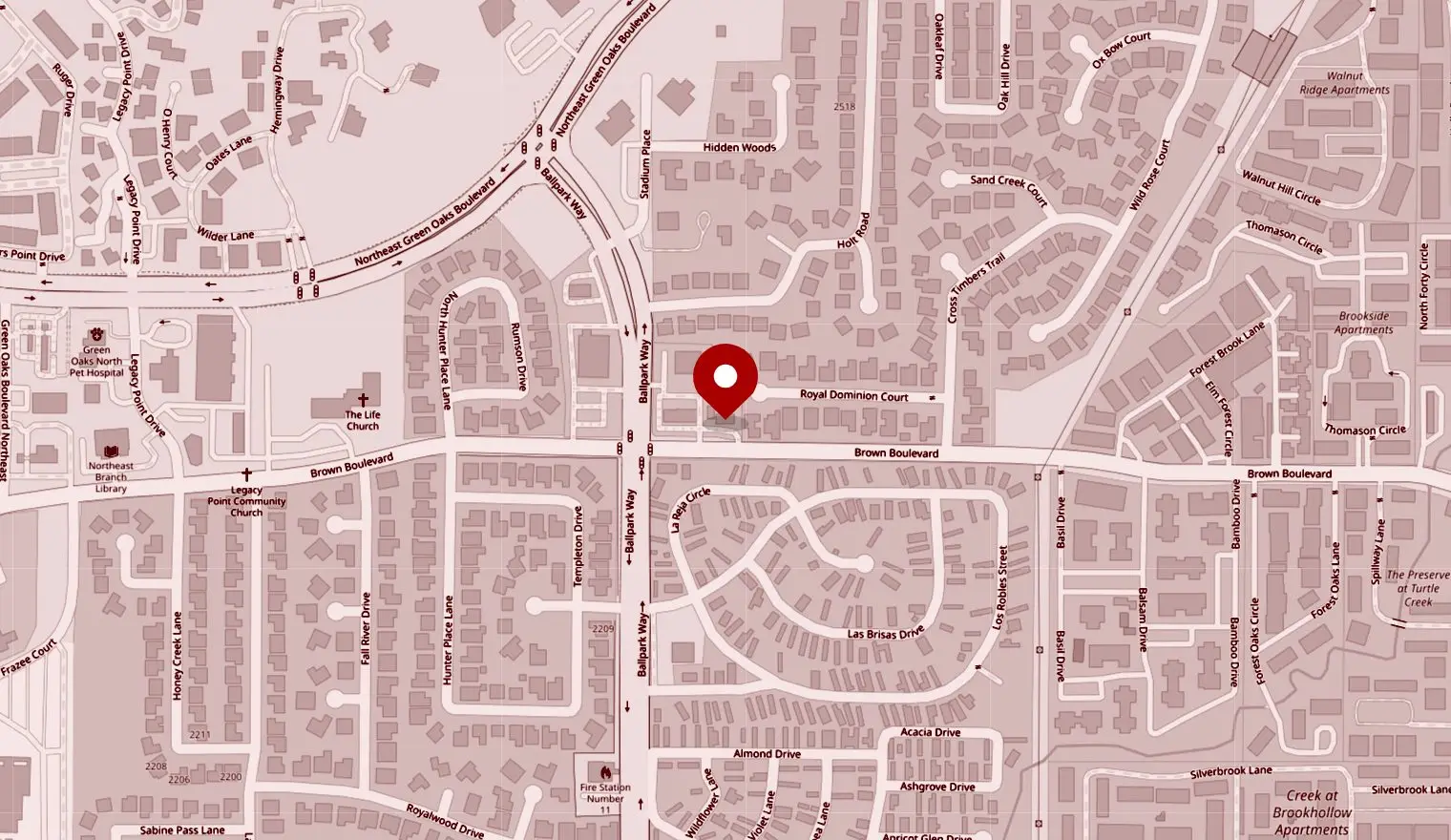
If you’ve spotted a bump on your sidewall, or you hit something hard and want a second opinion, we can take a look. Whether you’re coming from North Arlington, along Brown Boulevard, or off I-30 or Highway 360, we’ll check the tire and explain what we find in plain words.
Call us at (682) 248-3416 or request an appointment online. You’ll find us at 2105 Brown Blvd, Arlington, TX 76006. You can also learn more about the shop on our website.
FAQ
Is it safe to drive on a tire with a sidewall bulge?
No. A bulged tire is structurally compromised and at high risk of a sudden blowout, according to Michelin. Fit the spare and replace the tire. If you have no spare, drive only slowly and only as far as the nearest service center.
What’s the difference between a bulge and a bubble?
There isn’t one. The two words describe the same outward deformation caused by damaged internal cords. An indentation is different: it’s a shallow dip that the USTMA describes as a common, harmless trait of radial tires.
Can a bulge in a tire sidewall be fixed?
No. Flexing can make repair material detach and lead to sudden failure, so the tire has to be replaced. Punctures in the tread area are a separate issue and may be repairable if they meet certain conditions.
How long can I drive on a tire with a bubble?
There’s no safe number to rely on. The damage is hidden inside the tire, and the sidewall can fail without warning. The safest move is to put the spare on right away and get the tire replaced.
Are LT tires the same as regular passenger tires?
No. P-metric and LT-metric are different designations and can carry different loads. Choose your replacement using your vehicle’s placard, certification label, or owner’s manual, and ask a technician if you’re unsure.
Sources
- Sidewall Problems | Michelin USA
- USTMA Tire Information Service Bulletin on sidewall indentations (2024)
- USTMA Tire Information Service Bulletin on P-Metric and LT-Metric tires (2024)
- Tire damages | Continental Tires
- Tyre Bulge: Is it Safe and What Can Cause it? | Pirelli
- USTMA Tire Care and Safety Guide (2024)
- USTMA Tire Care and Safety Guide, earlier edition
- NHTSA Cooper Tire recall report 21T-002