
A P0300 misfire means your engine control module detected random or multiple cylinder misfires, and how urgent that is depends on one thing: whether your check engine light is flashing or steady. A flashing light paired with rough running means stop driving and get it towed. A steady light with mild symptoms means drive gently and schedule a diagnostic scan soon.
TL;DR:
- A P0300 misfire typically results from ignition, fuel delivery, mechanical, or sensor issues, not a single cylinder fault.
- Diagnostic priorities include checking misfire counters, freeze-frame data, fuel trims, and performing component swaps before replacing parts.
- Driving is generally safe with a steady check engine light and mild symptoms, but a flashing light with rough running requires immediate repair or towing.
- Severe, ongoing misfires can damage the catalytic converter by causing it to overheat and melt internal components, leading to costly repairs.
- Proper diagnosis through a data-driven scan saves money, protects the catalytic converter, and ensures the correct fix without unnecessary part replacements.
Table of Contents
- What Does P0300 Misfire Actually Mean?
- How Do You Know If It’s a P0300 Misfire?
- What Causes a P0300 Random Misfire?
- How Do Technicians Actually Diagnose a P0300?
- Is It Safe to Keep Driving With a P0300 Code?
- Why a P0300 Misfire Can Threaten Your Catalytic Converter
- What Happens After the Misfire Is Repaired?
- How Express Lube & Car Care Handles a P0300 Diagnosis
- Get Your Misfire Diagnosed the Right Way
- Sources
- FAQ
What Does P0300 Misfire Actually Mean?
A misfire happens when a cylinder fails to burn fuel properly, whether from a weak spark, poor fuel delivery, or lost compression. P0300 is different from codes like P0301 or P0304, which point to one specific cylinder. When the code reads P0300, the misfire is bouncing between two or more cylinders, or it’s happening too randomly for the computer to pin down a single source.
Your engine control module tracks this by watching crankshaft speed. Every time a cylinder fires correctly, the crank gets a small, predictable push. When a cylinder misfires, that push doesn’t happen, and the crank momentarily slows down. The computer counts these events using misfire counters and cross references them with live sensor data, sometimes called Mode 6 data, to decide when the pattern crosses a threshold worth flagging.
Federal emissions regulations actually dictate how your dashboard warns you about this. Under federal OBD-II rules, the check engine light must blink when a misfire is severe enough to risk damaging the catalytic converter, and stay solidly lit if the problem persists on later trips. That blinking light isn’t a glitch. It’s a built-in alarm.
How Do You Know If It’s a P0300 Misfire?
A misfiring engine rarely stays quiet about it. You’ll usually notice a rough or shaky idle, almost like the engine is stumbling in place at a stoplight. Acceleration can feel weak or jerky, especially under load, like merging onto a highway or climbing a hill. Fuel economy tends to drop because unburned fuel is going straight out the exhaust instead of powering the car.
Here’s what to watch for:
- Rough, uneven idle or an engine that shakes at stops
- Hesitation, stumbling, or loss of power when accelerating
- A noticeable drop in miles per gallon
- A check engine light that’s either steady or flashing
- Occasional popping or backfiring sounds from the exhaust
A steady check engine light with mild symptoms is a “get it looked at soon” situation. A flashing light, especially combined with a rough-running or shuddering engine, means the misfire is severe enough that KBB’s guide to the P0300 code advises limiting how far you drive until a technician can diagnose it.
What Causes a P0300 Random Misfire?
Random misfire causes generally fall into four buckets, and the fix can be as cheap as a spark plug or as involved as head gasket work. Here’s how technicians typically prioritize the search:
- Ignition system failures. Worn spark plugs, cracked coil packs, or degraded plug wires and boots are the single most common culprits behind a random misfire, according to KBB’s diagnostic breakdown. These parts wear out gradually, so the misfire often starts intermittent before becoming constant.
- Fuel delivery problems. A weak fuel pump, a failing pressure regulator, clogged injectors, or even a tank of contaminated fuel can starve one or more cylinders of the fuel they need to fire cleanly.
- Mechanical issues. Low compression from worn piston rings, a leaking head gasket, or valve sealing problems will cause a cylinder to misfire no matter how good the spark or fuel is. Timing chain or belt wear can throw off valve timing enough to trigger the same code.
- Air metering and electrical faults. Vacuum leaks let unmetered air into the engine and throw off the fuel mixture. A failing mass airflow sensor, faulty oxygen sensors, or a crankshaft or camshaft position sensor with a marginal signal can all confuse the computer into commanding the wrong fuel or spark timing.
If ignition parts are due, a tune-up and ignition service resolves a large share of random misfire cases before they progress to anything more expensive. Fuel-related causes often point toward a fuel system cleaning or repair instead.
How Do Technicians Actually Diagnose a P0300?
Skilled diagnosis follows a sequence, not a guess. Jumping straight to swapping parts is how owners end up paying for three sets of spark plugs before anyone finds the actual problem.
Here’s the general order technicians follow, based on ASE’s misfire diagnostics training:
- Pull the full code list and freeze-frame data to see what the engine was doing (RPM, load, coolant temp) the moment the misfire triggered.
- Record misfire counters for each cylinder using a scan tool, since OBDeleven’s technical breakdown notes this tells you which cylinders are actually losing contribution, not just which ones a generic code implies.
- Check live data for fuel trims and oxygen sensor activity to see if the engine is running rich or lean overall.
- Swap a coil or plug between a misfiring cylinder and a healthy one, then watch whether the problem follows the part. If it does, that component is the culprit.
- Run a fuel pressure and volume test, along with injector balance testing, if fuel delivery is suspected.
- Perform a compression or cylinder leak-down test when mechanical failure is on the table, since diagnostic guidance from AllData recommends confirming which cylinders are truly losing compression before any parts get ordered.
- Bring in an oscilloscope or Mode 6 data for stubborn cases, especially to check crankshaft and camshaft signal correlation on modern engines.
Pro Tip: If a shop wants to replace parts before pulling misfire counters or freeze-frame data, ask why. A proper diagnosis almost always starts with data, not a parts cannon.
Random parts swapping without this data is expensive and often doesn’t fix anything, since two cylinders can show identical symptoms for completely different reasons.
Is It Safe to Keep Driving With a P0300 Code?
It depends entirely on how the check engine light is behaving and how the car feels to drive. A steady light with only mild symptoms, like slightly rough idle or a small mileage dip, usually means you can drive cautiously to a shop in the next day or two. A flashing light means a severe misfire condition requiring immediate attention.
Before your appointment, it can help to check that the vehicle has sufficient quality fuel, look for obvious vacuum leaks, inspect spark plug wires or coil connections for damage, and ensure battery connections are secure and clean.
Clearing the code yourself can be tempting, but it erases the freeze-frame data and misfire counters a technician needs to diagnose the problem efficiently. If the code clears and doesn’t come back after a short test drive, that’s useful information. Just don’t clear it repeatedly to avoid a real diagnosis. Basic maintenance like a tune-up or injector cleaning is reasonable when symptoms are mild and ignition parts are overdue. Anything beyond that calls for a proper diagnostic scan.
Why a P0300 Misfire Can Threaten Your Catalytic Converter
Unburned fuel from a misfiring cylinder doesn’t just disappear. It travels straight into the exhaust system, where it can ignite inside the catalytic converter and generate extreme heat. EPA technical documentation confirms that severe, sustained misfires can melt a catalyst’s internal substrate in a short amount of time, turning a relatively inexpensive repair into a much costlier one.
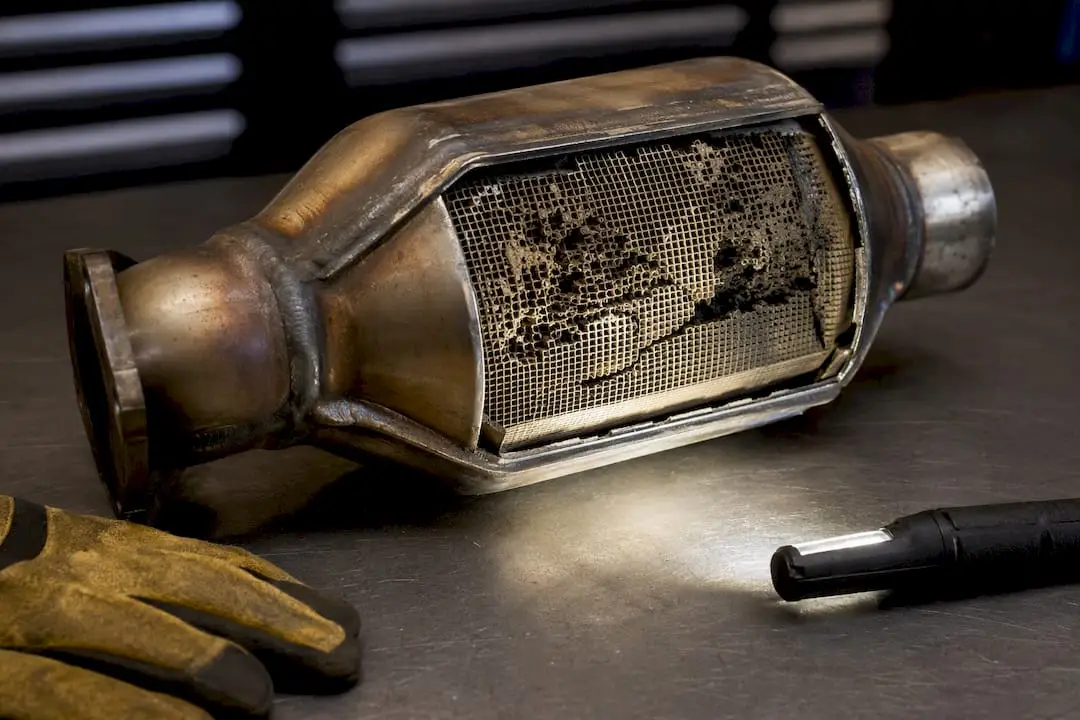
That’s the entire reason the flashing check engine light exists. Federal regulations require it specifically for misfire conditions serious enough to damage the catalyst. The rubric is simple: flashing light means stop and arrange a tow. Steady light with mild symptoms means get it inspected promptly. Rough running, stalling, or a serious loss of power, regardless of what the light is doing, means don’t keep driving on it.
What Happens After the Misfire Is Repaired?
A repair isn’t confirmed until the data proves it. Technicians recheck misfire counters after the fix, review the freeze-frame conditions that originally triggered the code, and complete the vehicle’s readiness monitors before calling the job done. A test drive under the same conditions that caused the original misfire, like highway load or a cold start, confirms the fix held.
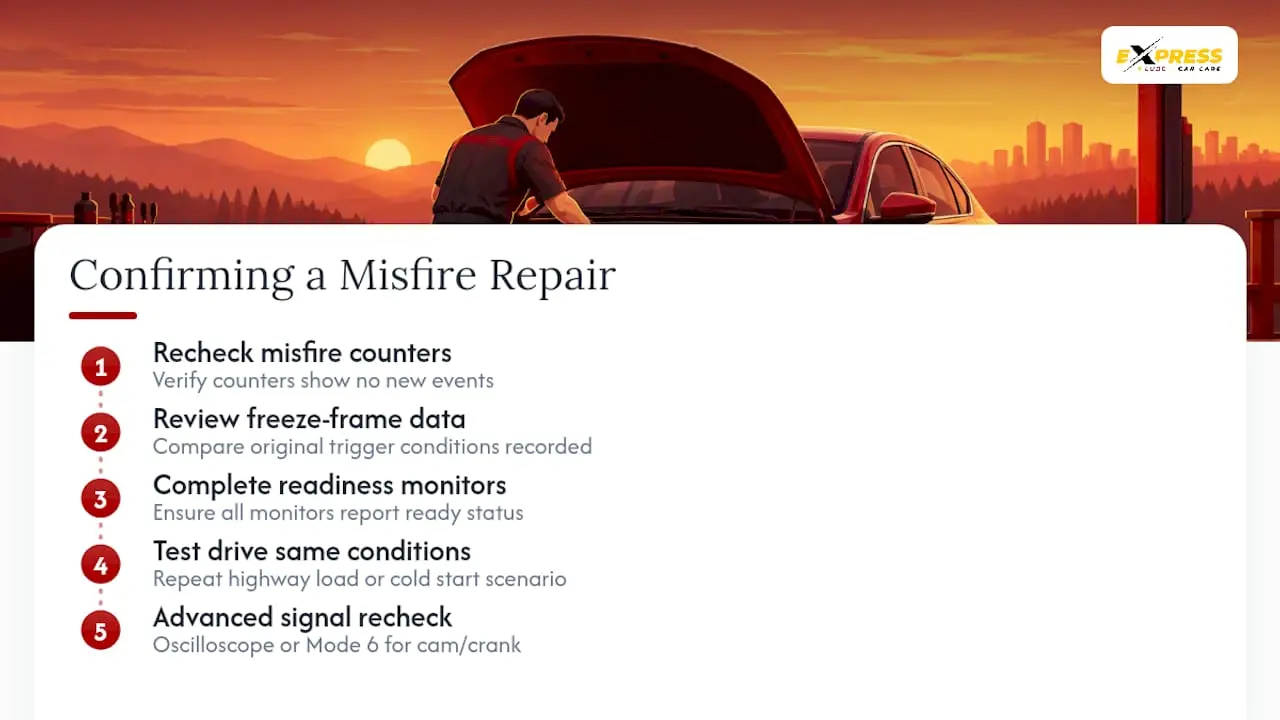
Some repairs, particularly those involving crank or cam sensor replacement, need an oscilloscope or Mode 6 recheck to confirm timing signals are correct. Preventing a repeat trip usually comes down to routine care: timely spark plug and coil replacement, regular preventive maintenance, and keeping the fuel system clean.
How Express Lube & Car Care Handles a P0300 Diagnosis
Our ASE-certified technicians follow that same scan-first, data-driven process on every misfire complaint that comes through the bay. Every job includes a digital vehicle inspection with photos and videos, so you can see exactly what we found instead of taking our word for it. That transparency is part of why Express Lube & Car Care carries RepairPal Certified and CARFAX Top-Rated recognition. If you’re dealing with a check engine light, book through our check engine diagnostics page and bring any scan printouts you already have.
Diagnose First, Protect the Catalyst, Keep Records
The biggest mistake owners make with a P0300 is guessing at parts instead of paying for the diagnostic scan upfront. That scan almost always costs less than a misdiagnosed repair, and it protects your catalytic converter from the kind of heat damage that turns a $200 problem into a much bigger one. Save your scan data and note when the symptoms happen, cold start, highway speed, idle, because that timeline is often the fastest route to the right answer.
— Express Lube & Car Care
Get Your Misfire Diagnosed the Right Way
A P0300 code you keep driving on doesn’t get cheaper with time. It’s the kind of problem that punishes guesswork and rewards a proper diagnostic scan, which is exactly what separates a $200 fix from a $2,000 catalytic converter replacement. Our shop runs a scan-first, data-driven process on every misfire that comes through our bays.

When you book an appointment, technicians start with a full code and freeze-frame read, then move through targeted ignition, fuel, and compression checks based on what the data shows. Inspections include photos and videos for transparency before repairs begin. If you already have a scan tool reading or freeze-frame printout from a parts store, bring it along; it saves diagnostic time and helps us zero in faster. Visit our engine diagnostics and repair page to see what’s included, or head straight to our services page to schedule your visit.
Sources
- p0300 Code – Random/Multiple Cylinder Misfire Detected
- P0300 – Random/Multiple cylinder misfire detected
- § 86.1806–01 On-board diagnostics
- Misfire Diagnostics – ASE
- Diagnosing Misfires
FAQ
How Do I Fix a P0300 Random Misfire?
Fixing it starts with diagnosis, not guessing. A technician reads misfire counters and freeze-frame data first, then tests ignition components, fuel delivery, and compression to find the actual cause, since KBB’s guide recommends diagnostic-first repair over blind parts replacement.
What Is the Most Common Reason for P0300?
Worn spark plugs, failing ignition coils, or damaged plug wires are the most frequent causes, according to KBB’s P0300 breakdown. Fuel delivery issues and vacuum leaks are the next most common causes when ignition parts check out fine.
Can I Still Drive My Car With a P0300 Code?
If the check engine light is steady and symptoms are mild, cautious short-distance driving to a shop is generally acceptable. If the light is flashing or the engine runs rough, stop driving, since federal regulations reserve that flashing signal for misfires severe enough to damage the catalytic converter.
Is a P0300 Misfire Expensive to Fix?
Cost depends entirely on the cause. Ignition-related repairs like plugs or coils tend to be on the lower end, while fuel system or mechanical issues like a head gasket cost more. Express Lube & Car Care doesn’t publish flat repair pricing online since costs vary by cause, but current service pricing details are available on our services page.
Can a P0300 Code Clear Itself?
It can clear temporarily if the misfire was caused by something minor like a one-time bad batch of fuel, but a recurring P0300 means an underlying issue is still present. Clearing the code without fixing the cause only erases the diagnostic data a technician needs, so it’s better to get it scanned before resetting it.