

The most common mass airflow (MAF) sensor symptoms are a check engine light, rough idle, stalling, hesitation or jerking when you accelerate, worse fuel economy, and sometimes black smoke from the tailpipe. AutoZone lists these same warning signs, and they overlap with plenty of other problems, including a dirty throttle body, a vacuum leak or worn spark plugs. So the symptom is where the detective work starts, not where it ends. Here’s how to read the clues, what’s safe to do yourself, and when it’s time to let a shop with a proper scan tool take over.
TL;DR
- A failing MAF sensor feeds the engine computer bad air readings, which shows up as rough idle, stalling, hesitation, jerking, poor mileage and a check engine light.
- A dirty throttle body causes very similar idle and stalling problems, so the two are easy to confuse without checking fuel trims and live data.
- A MAF trouble code does not always mean the sensor itself is bad. Vacuum leaks, misfires and damaged intake boots can set the same code.
- Don’t replace parts on a guess. Get the fault confirmed first, and never keep driving with a flashing check engine light.
- If your car is acting up around Arlington, we can scan it, read live data and tell you what’s really going on. Call (682) 248-3416.
Table of Contents
- What does a mass airflow sensor actually do?
- The most common mass airflow sensor symptoms
- Why a MAF sensor goes bad or gets dirty
- Dirty throttle body or bad MAF sensor?
- Can you drive with a bad MAF sensor?
- Should you unplug, reset or clean the MAF sensor?
- How a MAF sensor problem is actually diagnosed
- Our take: diagnose first, replace second
- Keeping your MAF sensor healthy
- Get it checked at our Arlington shop
- Frequently asked questions
- Sources
What does a mass airflow sensor actually do?
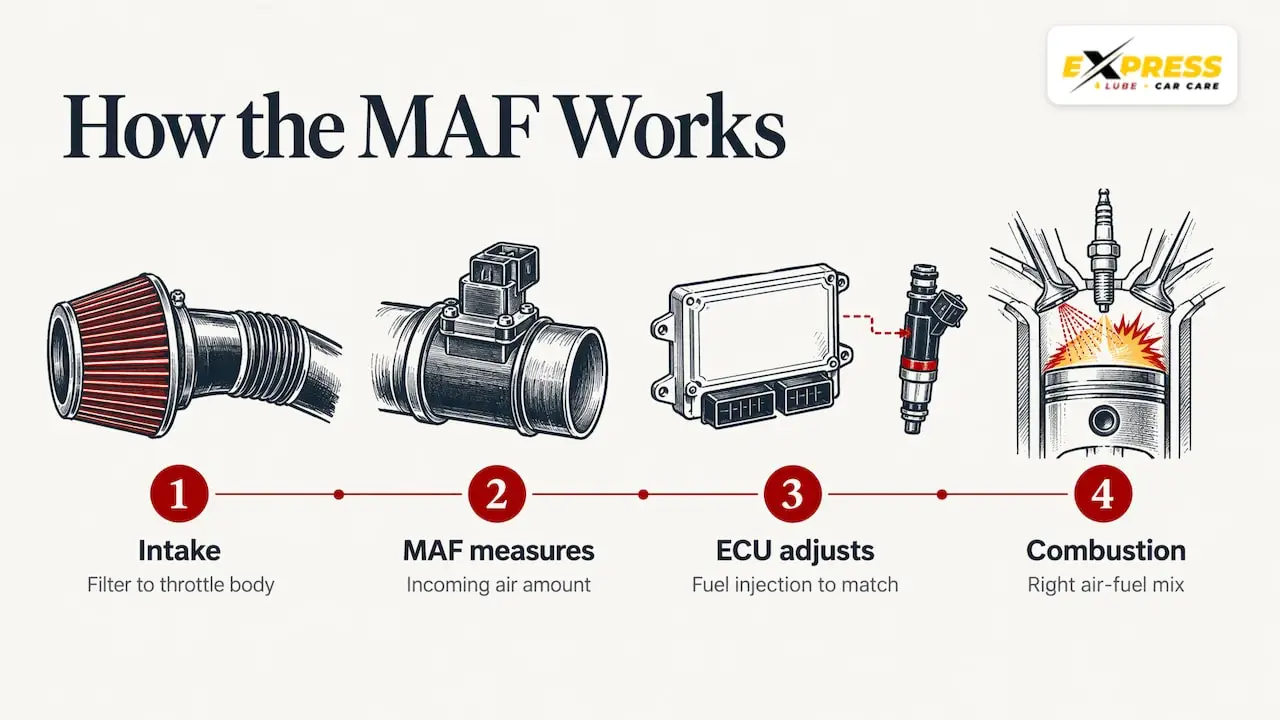
The MAF sensor sits in the intake tube between your air filter and the throttle body. Its job is simple to describe: it measures how much air is entering the engine so the computer can adjust fuel injection to match. DENSO describes it as the part that tells the ECU the amount of air coming in. AAA adds that the sensor works with the vehicle’s computer to get the right mix of air and fuel in the combustion chamber.
Think of it as the engine’s breathing monitor. If the monitor reports the wrong number, the computer feeds the engine the wrong amount of fuel. Too little fuel for the air is a lean condition. Too much is a rich one. Either way, the engine stops running the way it was designed to.
The most common mass airflow sensor symptoms
No single symptom proves a bad MAF sensor. What you’re looking for is a pattern. Here are the ones that show up most often.
Check engine light
The computer compares the MAF reading with what it expects based on throttle position and engine speed. When the numbers stop making sense, it typically sets a check engine light. Not every failing sensor triggers one, though. More on that below.
Rough or unstable idle
At idle the engine needs a small, steady amount of air and fuel. If the sensor under-reports or over-reports airflow, the idle may hunt up and down, shake at red lights or feel uneven. Lots of drivers describe it as the engine “almost” stalling every time they stop.
Stalling after startup or at a stop
The engine may start, run for a few seconds and die, or stall when you come to a stop sign. A wrong air reading at low speeds can upset the mixture enough to cut the engine out.
Hesitation, jerking or surging when you accelerate
Press the pedal to merge onto I-30 or Highway 360 and the car stumbles, bogs or lunges instead of pulling smoothly. Hesitation or surging during acceleration is one of the classic signs. It’s most noticeable when you ask for power quickly, because that’s when the computer relies hardest on the airflow number.
Worse fuel economy
A MAF problem can push the engine rich or lean, and AutoZone notes that both can hurt performance and fuel economy. If you’re filling up more often with no change in your commute, that’s a clue worth following.
Black smoke or a fuel smell
A rich mixture can send unburned fuel out the exhaust. Black smoke from the tailpipe is one of the symptoms commonly listed with a faulty sensor. It can also come from other fuel system problems, so treat it as a reason to get the car checked, not as a verdict.
Hard starting and loss of power
Some drivers notice long cranking before the engine fires, or a general lack of power on hills and when carrying a load. Both can trace back to a bad air-fuel calculation, though a weak fuel pump or ignition problem can cause them too.
Why a MAF sensor goes bad or gets dirty
Most MAF sensors have a delicate heated element or film that reads air passing over it. Anything that coats or damages that element throws off the reading.
- Dirt, dust and pollen. A tired or poorly sealed air filter lets fine debris through. DENSO lists a clogged or damaged air filter, dirt, dust and oil among the causes of sensor trouble.
- Oil contamination. One technical bulletin from a parts maker points to contamination from oil, dirt or pollen, often from over-oiled aftermarket filters, as the most common cause of failure.
- Wiring and connector problems. The same bulletin lists wiring damage, corroded connectors, age, vibration and moisture getting in.
- Normal wear. Electronics don’t last forever, especially under a hot, vibrating hood in a Texas summer.
This is one reason fresh air filters matter. Our maintenance service includes filter replacement, and following your vehicle manufacturer’s recommended schedule is the simplest way to keep the intake clean.
Dirty throttle body or bad MAF sensor?
This is the question behind many searches, and it’s a fair one. Both parts sit in the intake path. Both can cause rough idle, stalling and hesitation. The throttle body is the valve that opens as you press the pedal, and carbon buildup around it can disturb idle airflow. We cover that in detail in our guide to throttle body cleaning.
Here’s how they tend to differ:
| Clue | More likely MAF sensor | More likely throttle body |
|---|---|---|
| Check engine light | Often, with airflow or fuel trim codes | Sometimes, with idle or throttle codes |
| Idle behavior | Hunting or rough, may improve at higher rpm | Low or erratic idle, may stall when coming to a stop |
| Acceleration | Hesitation, surging, jerking | Sluggish pedal response, delayed throttle feel |
| Fuel trims on a scan tool | Often out of range at all speeds | Often off mainly at idle |
| Visible clue | Contamination on the sensor element | Black carbon around the throttle plate |
Treat that table as a starting point, not a diagnosis. The distinction usually comes down to checking fuel trims and looking for air leaks for a MAF suspect, versus directly inspecting and cleaning the throttle body. On many modern cars both parts are electronic, so a technician with a scan tool can see what each is reporting in real time.
A practical example
Say your SUV idles roughly at the light on Brown Boulevard, but runs fine once you’re at speed on I-30. That pattern leans toward an idle-air issue such as carbon at the throttle body or a small vacuum leak. Now say the same SUV also stumbles under hard acceleration, gets noticeably worse mileage and has a check engine light with an airflow-related code. That pattern points more toward the MAF circuit, though a leak in the intake boot could cause it too. In both cases the next step is the same: scan, look at live data and confirm before buying anything.
Can you drive with a bad MAF sensor?
Short answer: for a short, careful trip to a shop, often yes. As a long-term plan, no.
A bad sensor can leave the engine running rich or lean for weeks. AAA warns that ignoring a failing MAF sensor can lead to ruined spark plugs, a damaged catalytic converter and failing oxygen sensors. Those repairs cost far more than diagnosing the sensor early. If you want to understand why a faulty sensor can ripple through the rest of the engine, it helps to diagnose the source first before treating symptoms one at a time.
A few safety rules where it counts:
- Solid check engine light, car drives normally. AAA says a steady light may point to an issue affecting efficiency or emissions, or to something mechanical. Schedule a diagnosis soon.
- Car running poorly. AAA advises driving cautiously and addressing the problem right away. Stalling in traffic is a safety issue, so avoid highways and heavy traffic if the engine keeps cutting out.
- Flashing check engine light. The same AAA guidance says to pull off safely and call for help. A flashing light usually signals a misfire severe enough to damage the catalytic converter. Read our page on what a flashing check engine light means.
Should you unplug, reset or clean the MAF sensor?
These are the three “quick fix” ideas people search for. Here’s the honest rundown.
Unplugging the sensor
Some older vehicles may keep running on a default airflow value when the MAF is unplugged, but that varies by vehicle and isn’t a reliable test. Many cars run badly or set additional codes. We don’t recommend it as a diagnostic method.
Resetting the code
Clearing the code turns the light off. It doesn’t fix the cause, and the light will come back once the computer sees the same bad data. It also wipes useful information a technician could have used.
Cleaning the sensor
DENSO notes that cleaning a contaminated sensor may be a temporary solution but can damage its delicate hardware, and that a defective sensor needs replacement. If you do clean one, use a cleaner that won’t react with the sensor or housing and never scrub it. Don’t touch the element with a brush, cloth or compressed air nozzle. If your car has a MAF problem that cleaning doesn’t solve, the sensor isn’t the only suspect, and guessing gets expensive.
How a MAF sensor problem is actually diagnosed
This is where a pro shop earns its keep. A proper workup generally follows these steps, which match standard diagnostic guidance:
- Scan for codes with an OBD2 scan tool.
- Inspect the intake for air leaks, cracked boots, loose clamps and a dirty or damaged air filter.
- Watch live data. Compare the measured airflow to what’s expected for your engine at idle and under load.
- Check fuel trims. They show whether the computer is adding or removing fuel to compensate.
- Test the circuit. Verify power, ground, signal and terminal connections.
- Replace only after confirming the sensor is the fault.
Why the code alone isn’t enough
Walker Products points out that a MAF-related code doesn’t always mean the sensor is bad. Vacuum leaks, misfires, damaged intake boots or a clogged exhaust can trigger it. MOTOR’s diagnostic guidance says unmetered air entering after the sensor can cause lean operation, so a technician should look for that first.
Why no code doesn’t mean no problem
Sometimes there’s no light at all. DENSO notes that a clogged sensor passage may let the engine run without storing a trouble code. And a sensor can fail “in-spec,” still working but inaccurate. Trade reporting explains that an under-reporting sensor can cause lean conditions and hesitation or stalling during sudden acceleration, and that the engine computer can compensate for gradual contamination for thousands of miles, which makes it hard to catch.
What about the free code scan at the parts store?
It’s a fine first look. But AAA notes that parts stores are retailers: they can tell you which code was set, not what mechanical fault caused it. Some issues need specialized equipment and expertise beyond swapping the part a code seems to name. That’s the gap our check engine light diagnosis is built to fill.
Our take: diagnose first, replace second
We see it often: a driver replaces a MAF sensor because a forum said so, the light comes back, and the real culprit turns out to be a cracked intake boot, a misfire or a dirty throttle body. Parts guessing costs more than a proper diagnosis.
At Express Lube & Car Care, we’re a full-service shop, not just an oil change stop. Our ASE-certified technicians can scan codes, read live data and inspect the intake, then explain what they found. Our digital vehicle inspections include photos and videos, so you can see the issue for yourself rather than taking our word for it.
If the sensor needs replacing, that’s what we’ll recommend. If it doesn’t, we’ll say so. Qualifying repairs are backed by our 24-month/24,000-mile warranty, and we’ll walk you through what’s covered.
Express Lube & Car Care
Keeping your MAF sensor healthy
You can’t make a sensor last forever, but you can avoid the habits that shorten its life.
- Replace the air filter on schedule. Use your owner’s manual for the interval. We don’t believe in one universal number, because it depends on your vehicle and driving conditions.
- Be careful with oiled filters. Over-oiling is a known source of sensor contamination, as noted above.
- Keep up with oil changes. A neglected engine can send more oil vapor through the intake. Our oil change tips cover what to do and when.
- Fix small leaks and codes early. A minor intake leak or a misfire can turn into a bigger drivability problem.
- Don’t spray random cleaners in the intake. Use only products labeled safe for MAF sensors, and follow the directions.
DFW driving is hard on air filters. Construction dust, summer pollen and stop-and-go traffic on Brown Boulevard and the I-30 corridor all add up, so a quick intake check at each service is cheap insurance.
Get it checked at our Arlington shop
If your car is stumbling, idling roughly or throwing a light, our team can find the cause before you spend money on parts. We handle everything from routine maintenance to engine, transmission, electrical and fuel system repairs, so if the MAF sensor turns out to be a symptom rather than the problem, you’re already in the right place. You can see everything we do on our services page, or start at Express Lube & Car Care.

If a repair is bigger than you planned for, ask us about third-party repair financing options. Financing is offered through Snap Finance, and approval and terms are up to the provider.
For details on what’s covered after a repair, see our warranty information.
Frequently asked questions
What are the warning signs of a bad mass airflow sensor?
The usual signs are a check engine light, rough idle, stalling, hesitation or jerking on acceleration, reduced fuel economy and sometimes black exhaust smoke. Several of these also point to other problems, such as a dirty throttle body or a vacuum leak. A scan and live data check is the way to tell them apart.
Can you drive with a bad MAF sensor?
You can usually make a short, careful trip to a shop, but it’s not a good idea to keep driving for weeks. A bad sensor can damage spark plugs, oxygen sensors and the catalytic converter over time. If the check engine light is flashing or the engine is stalling, stop driving and get help.
What happens if you unplug the MAF sensor?
Some vehicles fall back on a default airflow value and keep running, while others run poorly or set more codes. It varies by vehicle and it isn’t a dependable test. A scan tool reading live airflow data tells you far more.
How can I tell a dirty throttle body from a bad MAF sensor?
Both can cause rough idle and stalling. A technician checks fuel trims, looks for air leaks and reads live MAF data to evaluate the sensor, then inspects the throttle body for carbon buildup. Cleaning the throttle body is a separate service, which we explain in our throttle body guide.
Is the MAF sensor worth diagnosing at a shop?
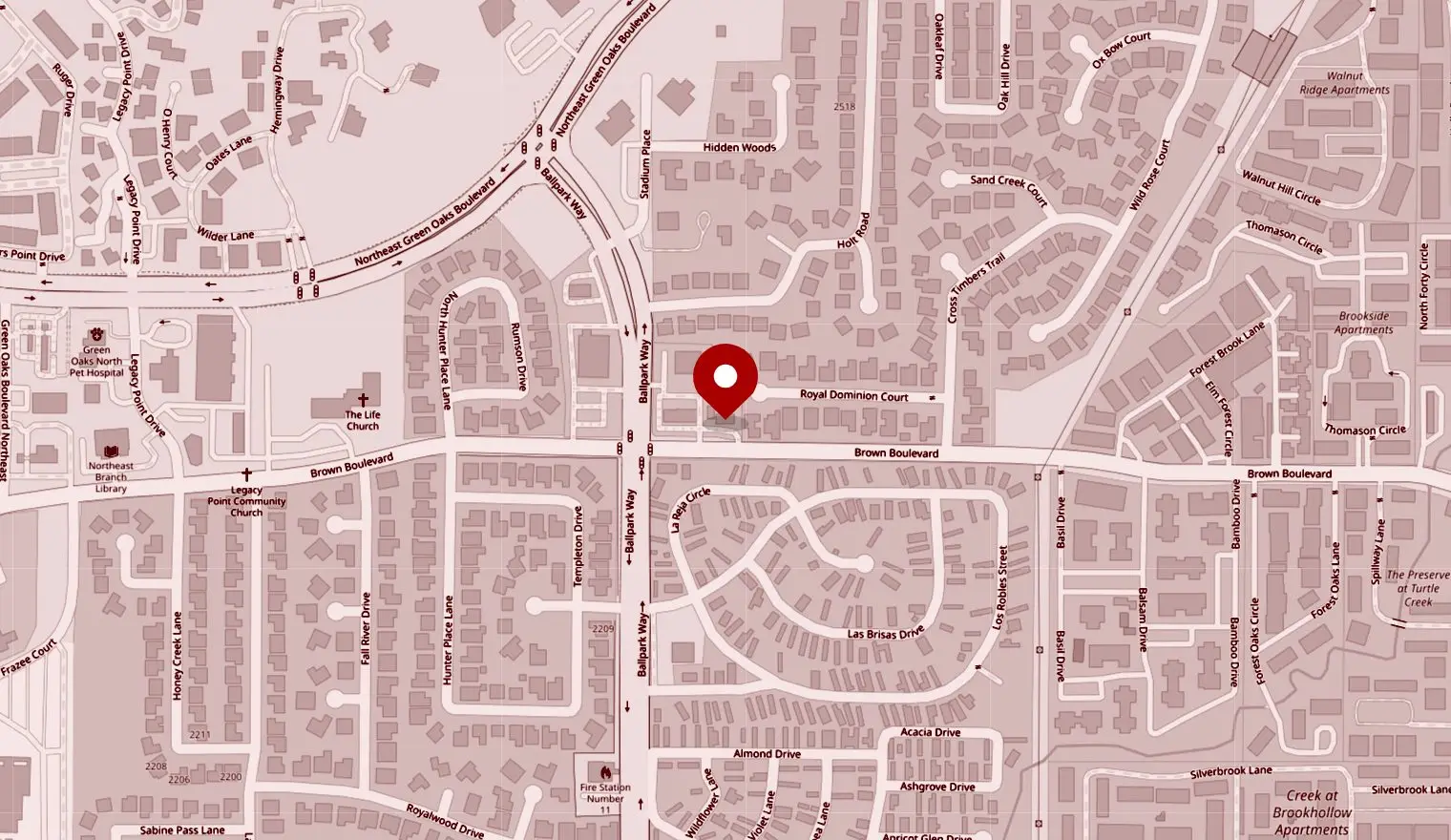
Yes, if the light is on or the car drives poorly. Confirming the cause first helps you avoid replacing parts you didn’t need. To schedule a diagnosis, book an appointment online, call us at (682) 248-3416 or stop by 2105 Brown Blvd, Arlington, TX 76006.
Sources
- The Symptoms of a Bad Mass Air Flow Sensor, AutoZone
- How to Check if Mass Airflow Sensor is Bad, Ancel
- How do Mass Air Flow sensors work, DENSO
- Top 5 Reasons Check Engine Lights Come On, AAA
- My Check Engine Light Is On! What Do I Do?, AAA
- Mass Airflow Sensors, TechASSIST Bulletin 03
- MAF Sensor Diagnosis Tech Tip, Walker Products
- Failure in Spec: What Happens When a Mass Airflow Sensor Lies
- Successful MAF Sensor Diagnosis, MOTOR
- Preventing Mass Airflow Sensor Failure, AZoSensors