

Spark plug replacement is a job many confident DIYers can handle in an afternoon with basic tools, though engines with tight access or active check-engine codes are usually better left to a shop. Parts typically run $3 to $30 per plug depending on material, with labor time varying by engine layout. Always check your owner’s manual first. It has the exact interval, torque spec, and plug type your engine needs.
TL;DR:
- Replacing spark plugs themselves typically costs between $3 and $30 per plug, with labor prices rising sharply for engines requiring extensive disassembly.
- Copper plugs are cheapest and common on older vehicles, while iridium plugs last longer but come at a higher material cost, making them ideal for high-mileage drivers.
- The task duration varies from under an hour on simple four-cylinder engines to several hours on engines with rear cylinders buried under intake components.
- Signs indicating the need for replacement include misfires, rough idle, hard starts, power loss, or a check-engine light, usually signaling between 30,000 and 100,000 miles depending on the vehicle.
- Seized or stubborn plugs should not be forced out, as this risks damaging threads, and such issues usually warrant professional removal to avoid costly repairs.
Table of Contents
- How much does spark plug replacement cost and how long does it take?
- Step-by-step DIY replacement: tools, preparation, and the exact sequence
- When to replace your spark plugs and the symptoms that tell you it’s time
- Common spark plug types and how to choose the right part for your car
- What removed plugs can tell you, critical quality checks, and common DIY mistakes
- Signs your spark plug wires or ignition coils need attention too
- Our take on DIY versus professional spark plug replacement
- Ready to book your spark plug replacement or diagnostic?
- FAQ
- Sources
How much does spark plug replacement cost and how long does it take?
Your total bill comes down to two things: plug material and how hard your engine is to reach. Copper plugs sit at the low end, platinum and iridium cost more upfront but last longer, and labor climbs fast when a shop has to pull off intake components or engine covers just to reach the back cylinders.
- Copper plugs: the cheapest option, often found on older or budget vehicles.
- Platinum plugs: a middle-tier choice with longer service life than copper.
- Iridium plugs: the priciest per plug but built to go longer between changes.
Shop estimates put parts between $3 and $30 per plug, with total cost rising sharply once labor accounts for disassembly on V6 and V8 engines where rear cylinders hide behind the intake manifold. A straightforward four-cylinder job might take under an hour in a shop bay; a transverse V6 can take considerably longer.
Step-by-step DIY replacement: tools, preparation, and the exact sequence
Before you touch a single plug, let your engine cool completely. A hot engine block can crack a cold spark plug on removal, and you do not want to find that out the hard way.
Here is the toolset that actually matters: a spark plug socket with rubber insert, extension bars (a wobble extension helps in tight spots), a gap gauge, and a torque wrench. That torque wrench is not optional. Guessing at tightness is how threads get stripped or plugs blow clean out of the head under compression.
- Confirm the engine is cold, then locate your spark plugs and clear away any debris near the wells.
- Disconnect the ignition coil or wire from the first cylinder only. Photograph the wiring before you pull anything loose.
- Remove the old plug with your socket and extension, working slowly to avoid dropping it into the well.
- Check the gap on your new plug with a gap gauge. Pre-gapped plugs can shift in shipping, so verify it against your manual’s spec rather than trusting the box.
- Hand-thread the new plug in by hand until it seats, then finish with your torque wrench set to the manufacturer’s spec.
- Reconnect the coil or wire to that same cylinder, then move to the next one and repeat.
Working one cylinder at a time keeps wiring and coil packs matched to their original positions, which matters more than it sounds. Mixing up coil pack positions can trigger misfire codes that send you chasing a problem that does not exist.
Pro Tip: If a plug feels seized or won’t turn after light pressure, stop. Forcing it risks stripping the aluminum threads in your cylinder head, turning a $20 part into a repair that costs far more.
A typical four-cylinder engine with good access takes most DIYers one to two hours including setup and cleanup. Engines that bury rear cylinders under intake plumbing, or that call for removing other components first, add real time and complexity. That is usually the point where a shop visit starts making more sense.
When to replace your spark plugs and the symptoms that tell you it’s time
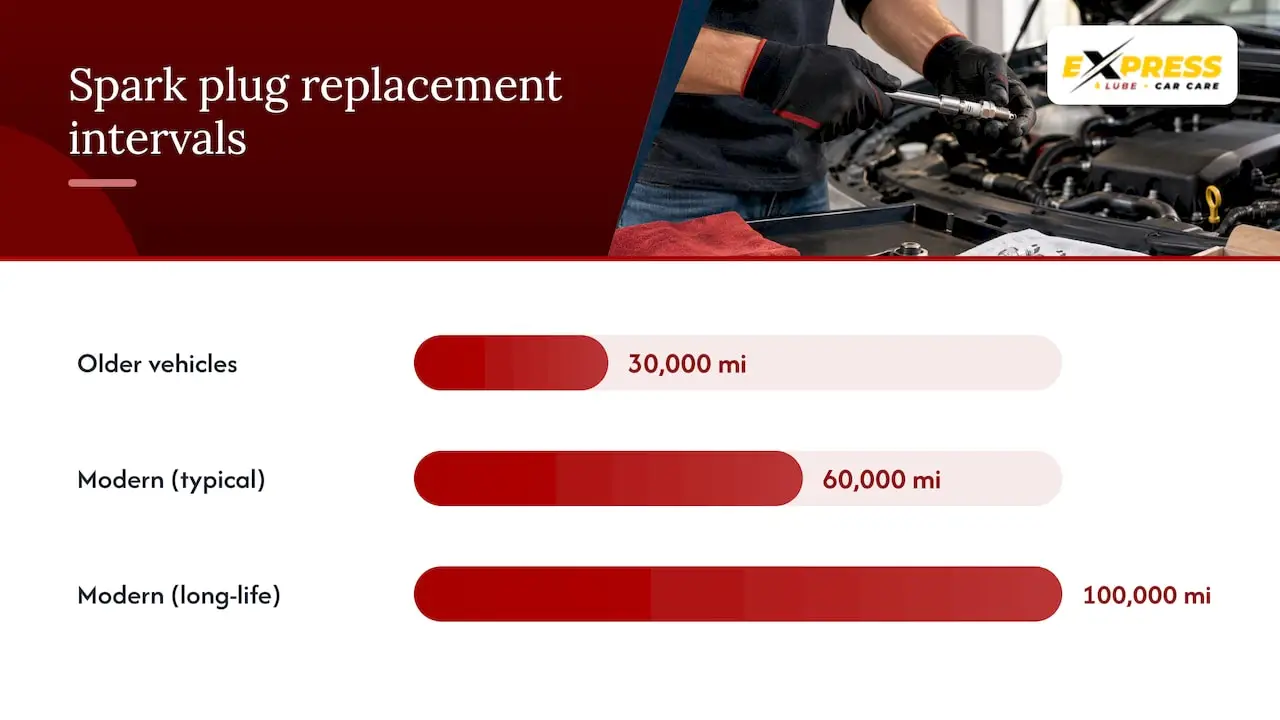
Many modern vehicles go 60,000 to 100,000 miles between spark plug changes, while older vehicles often called for replacement closer to every 30,000 miles. Your owner’s manual has the final word since plug material and engine design both shift that number. Our maintenance schedule breakdown walks through how spark plugs fit into your broader service plan.
Your engine usually gives warning before plugs fail completely:
- Misfires or a rough idle that you can feel through the steering wheel or seat.
- Harder starts, especially in cold weather.
- Noticeable power loss when accelerating or climbing hills.
- Lower fuel economy than you are used to.
- A check-engine light with an ignition-related code.
Towing, frequent stop-and-go idling, and extreme heat or cold all put extra stress on plugs and can shorten the interval your manual lists.
Common spark plug types and how to choose the right part for your car
Your plug material affects both price and how long it lasts before the next change:
- Copper: lowest cost, shortest service life, common on older engines.
- Platinum: better durability than copper at a moderate price increase.
- Double platinum: built for engines with waste-spark ignition systems.
- Iridium: the longest-lasting option and the highest price per plug.
Stick with your vehicle’s OEM part number or a verified equivalent rather than guessing by size. Most retail parts sites include a “fits my car” lookup tool that cross-references your year, make, and model. Upgrading to iridium can make sense if you drive high mileage and want fewer future changes, but if your manufacturer specifies a different plug for emissions or timing reasons, that spec should win over a generic upgrade.
What removed plugs can tell you, critical quality checks, and common DIY mistakes
The plug you pull out is a diagnostic tool in its own right, as explained in this spark advance tuning overview that details ignition timing and combustion quality checks. Technical inspection reports document specific failure patterns that point to deeper issues when you know what to look for:
- Carbon fouling (black, dry soot) often points to a rich fuel mixture or a clogged air filter.
- Oil fouling (wet, dark residue) can signal worn valve seals or piston rings.
- Cracked insulators may mean the plug was overtightened or dropped during a prior install.
- Bridged gaps from carbon buildup usually cause a dead cylinder until cleared.
Always torque to the manufacturer’s spec with a proper wrench. Anti-seize compound changes the torque needed by roughly 10%, so check your plug manufacturer’s guidance before applying it. If you find a seized plug, damaged threads, or an active diagnostic code you cannot clear, that is your signal to bring the vehicle in rather than keep working at it.
Signs your spark plug wires or ignition coils need attention too
Spark plugs rarely work in isolation, and a fresh set of plugs will not fix a failing coil or a cracked spark plug wire. If you are seeing a rough idle or misfire that persists after a plug change, the ignition components feeding those plugs deserve a look.
Watch for a visible crack or chafing along a spark plug wire’s insulation, since that lets spark jump to the engine block instead of the plug tip. A wire that feels brittle or shows white crust at the boot is another sign of age-related failure. On coil-on-plug systems, a single misfiring cylinder that follows the coil when you swap it to another cylinder points squarely at that coil rather than the plug underneath it.
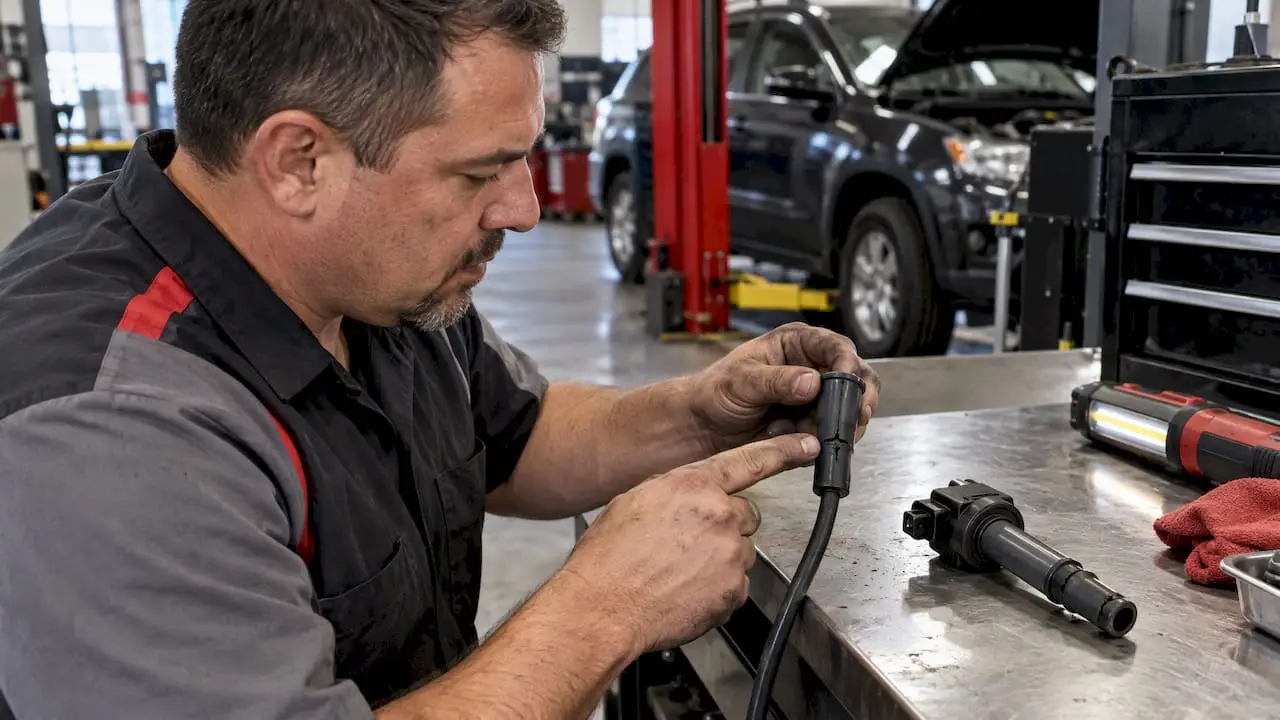
Engine hesitation during acceleration, a check-engine light with a specific cylinder misfire code, or a noticeable loss of smoothness at idle can all trace back to coils rather than plugs. Our guide to ignition coil failure symptoms covers how to read those codes and run a swap test before you assume the plugs alone are to blame. Replacing plugs while ignoring a failing coil or wire usually means repeating the job sooner than you planned, and it can mask the actual source of a misfire long enough to let other engine problems develop.
Our take on DIY versus professional spark plug replacement
We like seeing customers tackle straightforward plug jobs themselves. It builds confidence and saves money on easy four-cylinder engines with good access. Where we draw the line: seized plugs, active diagnostic codes, or an engine layout that buries plugs under intake components. We run a digital vehicle inspection with photos before recommending any work, so you see exactly what we see.
— Express Lube & Car Care
Ready to book your spark plug replacement or diagnostic?

Whether you want a second opinion before starting a DIY job or would rather hand it off entirely, our visit includes a diagnostic scan, ASE-certified technicians, and digital inspection photos so you know exactly what your vehicle needs. Bring your year, make, model, and any symptoms you have noticed. Visit our services page to book your appointment today.
FAQ
How often should spark plugs be changed?
Many modern vehicles go 60,000 to 100,000 miles between replacements, while older vehicles often needed new plugs closer to every 30,000 miles. Your owner’s manual gives the exact interval for your engine and plug type.
How much should it cost to replace my spark plugs?
Parts typically run $3 to $30 per plug depending on material, with copper on the low end and iridium on the high end. Labor adds to that total and climbs when a shop needs to remove intake components to reach the plugs.
Can I replace the spark plugs myself?
Yes, many owners handle this job with a torque wrench, spark plug socket, and gap gauge, especially on four-cylinder engines with easy access. Jobs involving seized plugs, buried rear cylinders, or active diagnostic codes are safer left to a professional shop.
What do I do if a spark plug feels stuck during removal?
Stop turning and do not force it. A seized plug can strip the threads in your cylinder head, and that repair costs far more than the plug itself, so this is a good reason to bring your vehicle to a shop.
Sources
- The tools needed to change spark plugs — AutoZone
- Spark Plug Replacement Prices & Cost Estimates — KBB
- NTSB technical excerpt on spark plug conditions
- Spark plug gap tip — Champion Auto Parts