
An oil pan gasket leak is oil seeping from the seam where the oil pan bolts to the bottom of the engine. The usual signs are dark drips under the car, a burning-oil smell, and an oil level that keeps dropping. A slow seep can sometimes be monitored for a short time. A steady drip, a puddle, or a red oil light means you should stop driving and get the car looked at. The fix is replacing the gasket or sealant. How big a job that is depends heavily on your engine.
We see this at our shop on Brown Blvd all the time, and most drivers come in asking the same thing: “Is this serious, and can I keep driving?” Let’s walk through it.
TL;DR
- The classic symptoms are oil spots under the engine, a burning smell, smoke from the engine area, and frequent top-offs.
- Oil dripping from higher up (like a valve cover) often runs down and pools at the pan, so the pan gasket gets blamed unfairly. Find the highest wet spot before you replace anything.
- A small seep is not an emergency, but low oil can ruin an engine. Check the dipstick often, and park the car if the oil light comes on.
- Repair cost depends on labor. Some engines need the pan lowered easily, others need a subframe moved or the engine lifted.
- Bottled stop-leak is not a substitute for a proper diagnosis and repair.
Table of Contents
- What an oil pan gasket does and why it leaks
- Oil pan gasket leak symptoms
- How serious is an oil pan gasket leak?
- Can you drive with a leaking oil pan?
- Is it really the oil pan gasket? Finding the true source
- What the repair involves
- What about stop-leak additives?
- Our perspective
- Prevention: keeping the seal healthy
- Getting it fixed in Arlington
- FAQ
- Schedule an oil leak inspection in Arlington
- Sources
What an oil pan gasket does and why it leaks
The oil pan is the metal reservoir under your engine that holds oil when it is not circulating. A gasket (or a bead of sealant on some engines) sits between the pan and the engine block so oil stays in. Think of it as the weatherstripping around a door: fine for years, then it quits.
Gasket materials slowly lose their ability to seal under constant heat, pressure, vibration and exposure to hot fluids, which is why leaks usually start as small spots and grow. Temperature swings and vibration also wear a pan gasket down over time. Here in North Texas, long summer heat followed by cooler snaps, plus stop-and-go on I-30 and Highway 360, is exactly the kind of cycle that tires out rubber and cork.
Common causes include:
- Age and heat. The gasket hardens, shrinks or cracks.
- Loose or uneven pan bolts. Bolts can lose clamping force over time. Over-tightening can also crush a gasket or warp the pan flange.
- Road damage. A hit from debris or a high curb can dent or crack the pan itself, which no gasket will fix.
- Previous repairs. A gasket installed on a dirty surface, or with the wrong sealant, can start seeping again.
- Excess crankcase pressure. A clogged ventilation system can push oil past seals. This is one reason a shop looks at the whole picture, not just the gasket.
Oil pan gasket leak symptoms
No single sign proves it, but these are the ones to watch for.
Oil on the ground under the engine
Dark brown or black spots toward the front or middle of the car, under the engine, are the most common clue. Fresh oil is amber, and older oil is nearly black. Slip a piece of cardboard under the car overnight to see where drips land and how big they are. Our guide to what an oil drip under your car actually means helps you read the color and location.
A burning oil smell
When leaking oil lands on hot exhaust parts, it burns off with a sharp smell, sometimes with light blue or gray smoke from the engine area. If you smell it mostly after stopping at a light or parking, that is a hint the oil is dripping on something hot.
An oil level that keeps dropping
If you are adding oil between changes and the car is not burning it through the tailpipe, a leak is a likely culprit. A frequently low oil level despite routine maintenance is a widely listed sign of a pan gasket leak. If there is no puddle but the level still falls, read our checklist on a car burning oil, because the oil may be going out the exhaust instead of onto the ground.
Warning lights or engine noise
A severe leak can trigger the oil pressure light. If that light comes on, here is what to do right away.
How serious is an oil pan gasket leak?
It depends on how fast oil is leaving. Think of it on a scale:
| What you see | How urgent | What to do |
|---|---|---|
| A few spots on the driveway, oil level steady between changes | Low, but not ignorable | Check the dipstick weekly and schedule an inspection |
| Fresh drips every time you park, oil level dropping | Moderate | Book a diagnosis soon and top off as needed |
| Puddle forming, strong burning smell or smoke | High | Limit driving to getting to a shop |
| Oil light on, ticking or knocking noises | Stop now | Shut the engine off and have the car towed |
The real danger is not the stain on your garage floor. It is the engine running low on oil. Oil lubricates and cools moving parts, and when the level gets too low, friction and heat can damage the engine. That is the kind of repair that turns a gasket job into a major engine repair.
Can you drive with a leaking oil pan?
For a slow seep, short trips are possible if you check the oil level often and keep a quart of the correct oil in the car. Use the oil type and viscosity listed in your owner’s manual. Do not stretch it, though. Leaks that are slow today can get worse without warning if the gasket tears.
Stop driving if:
- the oil pressure warning light comes on,
- you see oil dripping steadily or pooling,
- you see smoke from under the hood,
- the dipstick reads below the minimum mark and topping off does not hold.
Oil dripping onto a hot exhaust is also a fire concern. If you see smoke or smell strong burning oil, pull over somewhere safe and shut the engine off.
Is it really the oil pan gasket? Finding the true source
This is the part that saves people money. Gravity moves oil downhill. Oil from a leaking valve cover, a rear main seal, or an oil filter housing can run down the engine and collect at the oil pan, making the pan look like the source. Castrol’s leak guidance says to trace the leak up to its highest point, and the same advice shows up in professional training material, which stresses finding leaks visually or with tools that pressurize the system.
A simple way to narrow it down
- Park on level ground, engine off and cool.
- Look for wet, grimy areas on the pan seam and on the engine above it.
- Clean the area. If you want to do it yourself, here is a guide to cleaning the engine bay safely. Keep water away from the alternator, air intake and electrical connectors.
- Drive a short loop, then look again. The first place that turns wet is the lead suspect.
- Note whether oil is on the seam itself, or higher up and running down.
A shop can go further by using dye, UV light, or pressure tests. That is why we recommend a professional diagnosis before parts get replaced. Guessing wrong means paying for a gasket you did not need while the real leak keeps going. A valve cover gasket is a very common look-alike, and we cover it in our valve cover gasket leak checklist.
Other things that mimic a pan leak
- Valve cover gasket
- Oil filter or its adapter
- Drain plug and its washer, especially right after an oil change
- Rear main seal or front timing cover seal
- Oil cooler lines
- Fluids that are not engine oil at all, such as transmission fluid. If the drip is reddish, see our transmission fluid leak triage.
What the repair involves
The basic steps: drain the oil, lower or remove the pan, clean both mating surfaces, install a new gasket or the sealant the manufacturer specifies, torque the bolts in the correct pattern, refill with oil and a fresh filter, and check for leaks.
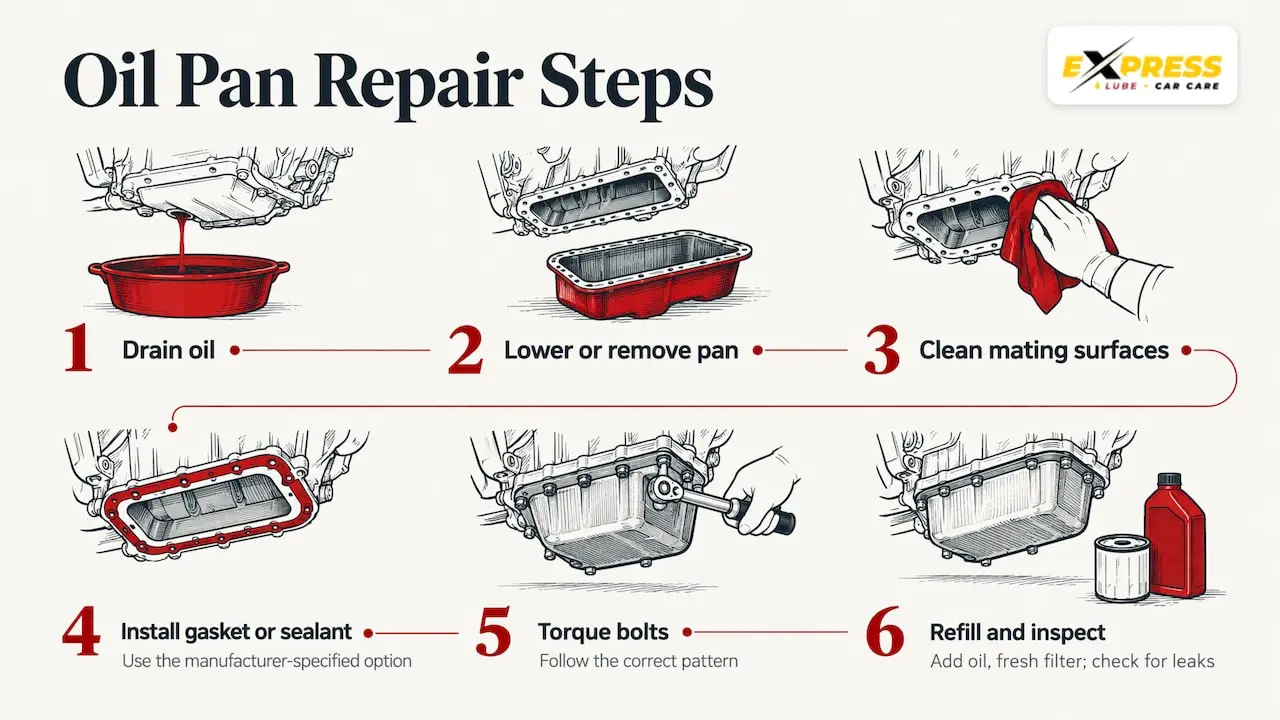
What varies is access. On some vehicles the pan drops right out. On others, there may be a need to lift the engine, remove a subframe, or use special tools, and some sealants need time to cure before the engine can be filled and run. That is why you cannot compare quotes on the job name alone.
Is replacing an oil pan gasket hard?
For many home mechanics it is a long, messy job, and the margin for error is thin. Over-tightened bolts, a dirty flange or the wrong sealant can bring the leak right back. The oil pan also sits low, so working under a car safely takes proper lifts or jack stands. Many drivers decide the job is better done in a shop with a lift.
What affects the cost?
We do not publish a flat price for this job because it depends on your vehicle. These are the factors that move the number most:
- Labor time. Engine layout is the biggest driver.
- Pan condition. A dented, cracked or corroded pan may need replacing, not just the gasket.
- Related leaks. If the valve cover or another seal is leaking onto the pan, it often makes sense to deal with it at the same time.
- Oil and filter. Fresh oil goes in after the repair.
- Sealant or gasket type the manufacturer calls for.
Ask any shop for a written estimate that lists labor and parts separately, and ask what the diagnostic step covers. Our write-up on what a car diagnostic fee actually costs explains what that fee pays for.
What about stop-leak additives?
Bottled stop-leak products claim to swell and soften old seals. They are sold as a way to slow minor seepage, and some drivers use them to buy time. They do not repair a torn gasket, a cracked pan, or loose bolts, and they do not replace proper diagnosis. If you use one, treat it as a short-term measure, keep checking the dipstick, and still have the source confirmed.
Our perspective
We treat every oil leak as a diagnosis first and a repair second. A wet oil pan is a symptom, and the real source is sometimes a valve cover or seal above it. Replacing the wrong part wastes your money and leaves the leak running.
Our ASE-certified technicians inspect the vehicle, trace the oil to its highest point, and show you what they found through a digital vehicle inspection with photos and videos. Then you decide. If a pan gasket is the cause, we repair it as part of our full-service engine and mechanical work, and qualifying repairs are covered by our 24-month/24,000-mile warranty.
Our advice is simple: do not wait until the oil light tells you. A small leak is the cheapest time to fix an oil leak, and a routine oil change is a good moment to have someone look underneath.
Express Lube & Car Care
Prevention: keeping the seal healthy
You cannot stop a gasket from aging, but you can avoid speeding it along.
- Change oil on the schedule in your owner’s manual. Follow the manufacturer’s intervals and the oil type it lists, rather than a rule of thumb. Our guide to the benefits of routine oil changes shows why.
- Have the undercarriage looked at during service. Early seepage is easy to spot on a lift.
- Avoid scraping the pan. Take speed bumps, construction plates and steep driveways slowly.
- Fix small leaks early. Oil on belts and hoses breaks down rubber and can turn one repair into several.
- Check your oil between visits. Once a month is a reasonable habit, and more often if you already know the car leaks.
For more on avoiding bigger bills, read our tips on avoiding costly engine repairs.
Getting it fixed in Arlington
We are a full-service shop, not just an oil change stop. We handle everything from routine maintenance to engine repair and replacement, and you can see the full list of our repair and maintenance services, including engine work. We’re a RepairPal Certified Shop and a CARFAX Top-Rated Service Center, and most jobs are completed same day.
Whether you commute on I-30, drive Highway 360 daily, run a delivery route, or manage a fleet, a leak that goes unchecked costs you time as well as money. Drivers from Grand Prairie, Euless, Bedford and Hurst also stop in when they are near North Arlington.

Bring the car in, tell us what you have noticed and when, and we will trace the leak before recommending anything. You can start at our home page or call (682) 248-3416.
FAQ
How much does it cost to fix an oil pan gasket leak?
The price depends on your vehicle, mainly because labor varies so much. Some engines allow easy access, while others require extra disassembly. A cracked pan, other leaking seals, and the oil and filter also affect the total. Ask for a written estimate after the leak has been traced to its source.
Can I use stop-leak instead of replacing the gasket?
Stop-leak is sold to slow minor seepage, but it does not fix a torn gasket, loose bolts or a damaged pan. If you use it, keep checking your oil level and still have the source diagnosed. A proper repair is the only dependable fix.
How do I know if the leak is the oil pan gasket or the valve cover?
Trace the oil to its highest point. Valve cover oil often runs down the engine and collects at the pan. Cleaning the engine and watching where it gets wet again, or having a shop use dye or UV light, gives you a reliable answer.
What should I do if the oil light comes on?
Pull over safely and turn the engine off. Do not keep driving. Check the dipstick, and call for a tow if the level is low or the light stays on. Running an engine without enough oil pressure can cause serious damage.
Can a leak start right after an oil change?
Yes. A loose drain plug, a worn drain plug washer or a poorly seated filter can leak right after service and look like a pan leak. Go back to the shop that did the work as soon as you spot it.
Schedule an oil leak inspection in Arlington
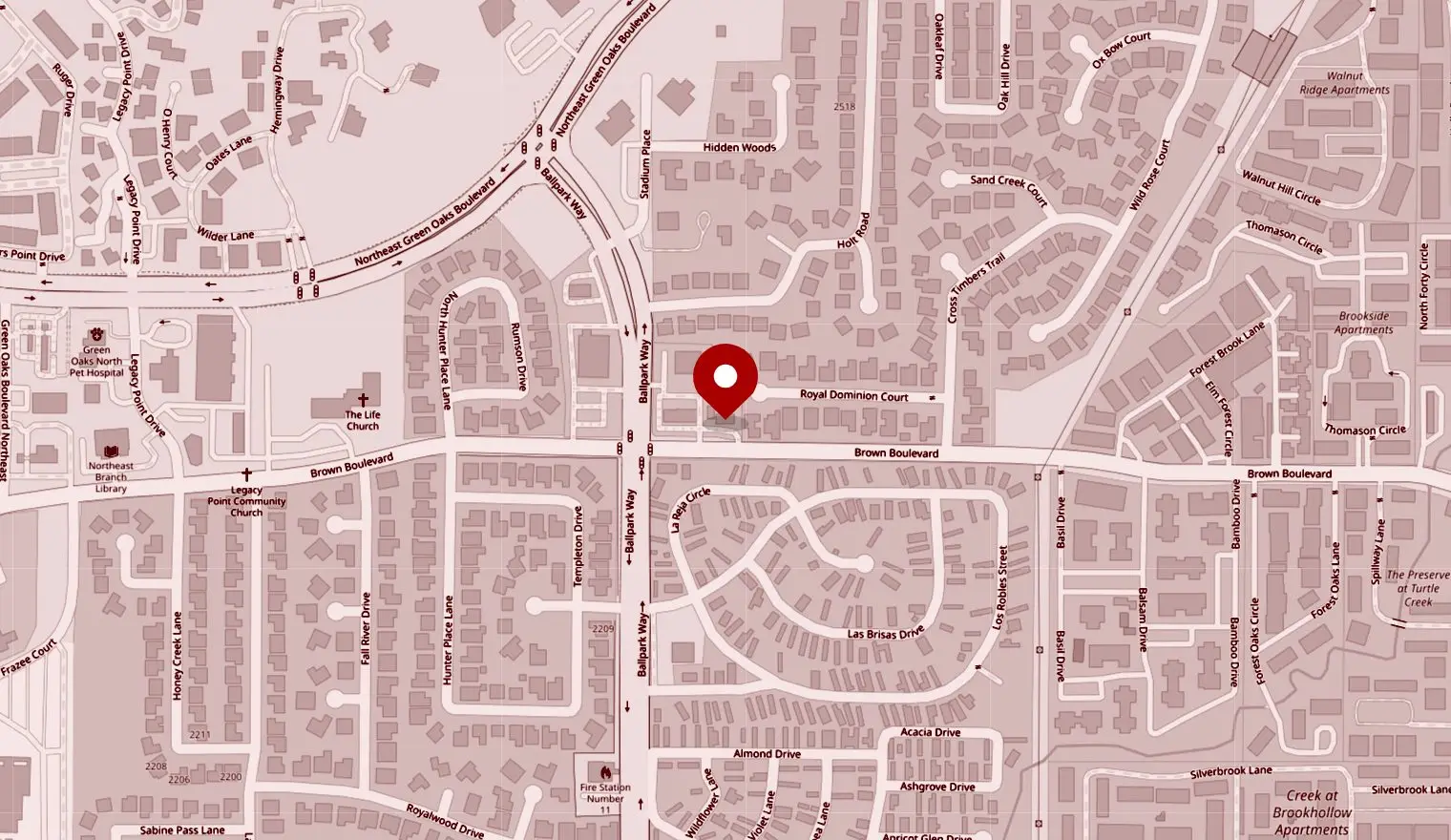
If your car is leaving spots, smelling like burning oil or asking for a quart too often, we can find out why. Schedule a visit through our appointment page or call (682) 248-3416. You will find us at 2105 Brown Blvd, Arlington, TX 76006.
Sources
- Causes of Oil Leaks, Fel-Pro Gaskets
- What causes an oil pan gasket to leak, MJ Gasket
- Oil Pan Gasket Leak Symptoms, Advanced Engine Seals
- How to Replace an Oil Pan Gasket, AutoZone
- How to fix an oil leak, Castrol USA
- ASE G1 Prep: Gaskets and Leak Diagnostics, Tomorrow’s Technician
- Oil Pan Gasket Leak: Symptoms, Causes & Fixes, FridayParts
- Clean engine bay: safe steps and ceramic protection